
Eyes On the Skies: Astronomy in Hawai’i, Upcoming Meteor Showers, and Makahiki
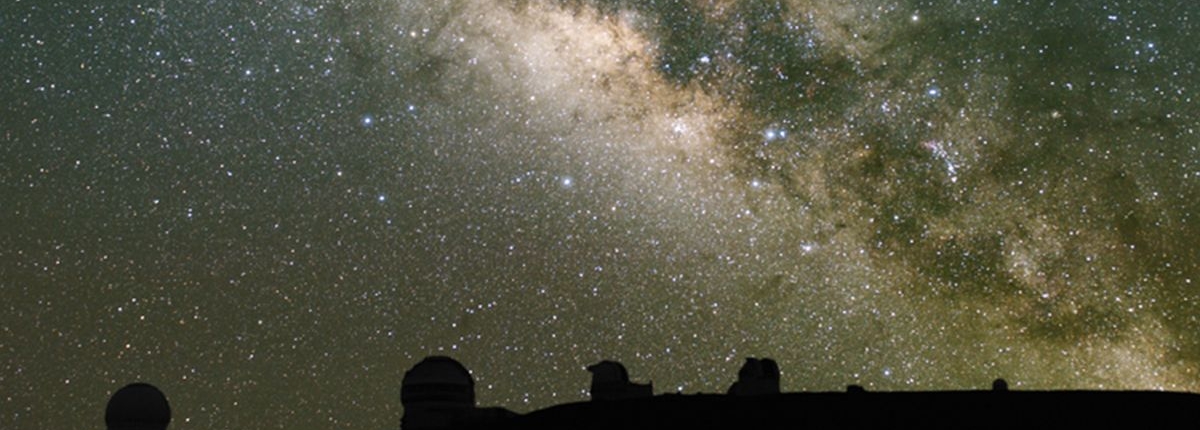
The dazzling night sky, including the Milky Way, as seen from atop Mauna Kea.
As with many ancient societies, Hawaiians have looked to the stars for inspiration in all aspects of life. The calendar is set by the stars, the fabulous exploits of mighty gods can be read from the constellations, and the ability to use the skies as a map was a crucial skill for Polynesian sailors. These days, the Hawaiian Islands, and Kaua’i in particular, are some of the best spots in the world for stargazing thanks to their remote location and lower levels of light pollution. Whether you’re turning your eyes to the skies to travel back in time and gaze at the same constellations as ancient Hawaiians, or just hoping to catch a glimpse of something breathtaking, the night sky on Kaua’i is one of the most beautiful parts of the island. The best part? All you have to do is remember to look up!
Makahiki: A Season of Renewal, Feasting, and Celebration
As we head into the winter holiday season, ancient Hawaiians would have been entering a similar time of gathering, feasting, and celebrating, known as Makahiki! Makahiki is a 4-month stretch where all fighting and labor is forbidden, and the focus instead turns to large feasts and gatherings with sporting events, games, and dancing, all in honor of the god Lono.
Makahiki begins when the constellation Makali’i (what we call the Pleiades) rises in the sky after sunset in mid-November. The first crescent moon following the appearance of Makali’i marks the start of Makahiki, which continues until the constellation sinks back into the horizon around mid-March. This is also where we get the phrase hau’oli makahiki hou, or “happy New Year” in Hawaiian. During these months, everyone is focused on renewing and nurturing existing relationships, forging new ones, celebrating the successful harvest, and enjoying a time of much-needed play and joyfulness before the hard work of the next year’s planting season begins. Sounds pretty similar to what we all get up to with our friends and families during the holiday season stretching from Thanksgiving to New Year’s!
Modern Astronomy in Hawai’i
As the Kingdom of Hawai’i entered occupation and fell under Western influences, astronomers were quick to flock to the islands for their unique positioning, dark skies, and ideally situated mountain peaks that would later become home for some of the world’s highest-powered telescopes. Interest in the stars was not only coming from external forces, however. Hawai’i’s last reigning king, the “Merrie Monarch” David Kalakaua, had a keen interest in astronomy, and traveled to San Francisco to tour Lick Observatory in 1881, before bringing a telescope back for the still-operating Punahou School in Honolulu.
A few decades later, in 1910, the University of Hawai’i (then known as the College of Hawai’i) would open the first public observatory on the islands, Kaimuki Observatory, in order to observe the passing of Halle’s Comet. While Kaimuki Observatory did not withstand the tests of time, it did establish Hawai’i as a significant astronomic observation location, which paved the way for the world-renowned Mauna Kea Observatory to open in 1956.
Rivaled only by the cluster of observatories in Chile’s Atacama desert, the observatories and high-powered telescopes resting atop Mauna Kea have been home to the world’s preeminent astronomers, and the source of some of the most critical astronomical discoveries of the last 70 years. In 2011, the Nobel Prize in Physics was awarded to a group of astronomers who discovered that the universe is expanding at an accelerating rate due to the presence of dark matter. These awe-inspiring findings were only made possible because of the amazing capabilities of the Mauna Kea Observatories.
Even for the hobby astronomer, or just the casual stargazer, the Mauna Kea Observatory is a household name, and a bucket list vacation spot. That’s not to say, though, that Big Island is the only stargazing hot spot among the islands!
Stargazing on Kaua’i & the Upcoming Geminids Meteor Shower
While Kaua’i keeps a lower profile in almost all aspects compared to its sister islands, that actually provides the perfect setup for night-sky enthusiasts. The lower-profile urban development, diffuse population centers, and dark-sky ordinances to protect migrating seabirds all mean that the sky on Kaua’i is much, much darker than pretty much anywhere in the mainland United States. You don’t even need a telescope to be able to see the gentle swirls and colors of the Milky Way Galaxy, and the dense blanket of stars you can see with the naked eye is enough to make you feel like the smallest ant looking up at our faraway cosmos. Kaua’i’s low latitude also means you’re able to observe Southern constellations, such as Scorpius, Southern Cross, and Centaurus, that are typically invisible from the father-North Mainland.
All of these factors make Kaua’i the perfect spot for staying up late, cozying up with a blanket and hot beverage, and trying your eye at spotting the slow-moving meteors typical of the Geminids! The Geminids will be peaking from December 13-14, and viewing conditions should be ideal thanks to that night’s waxing crescent moon. Peak activity is after midnight, usually around 2am, or 0200, and you can expect up to 120+ meteors per hour at peak. No telescope is necessary, and this is a great activity for young’uns and geezers alike! Stay up late, watch the stars, catch an island sunrise, and leave with a memory you can’t make anywhere else. We promise it’ll be worth the nap you have to take the next day!